Data
04.03.2016
Autor
Magazyn Wrocław
Work Service: Z akademika na londyńską giełdę
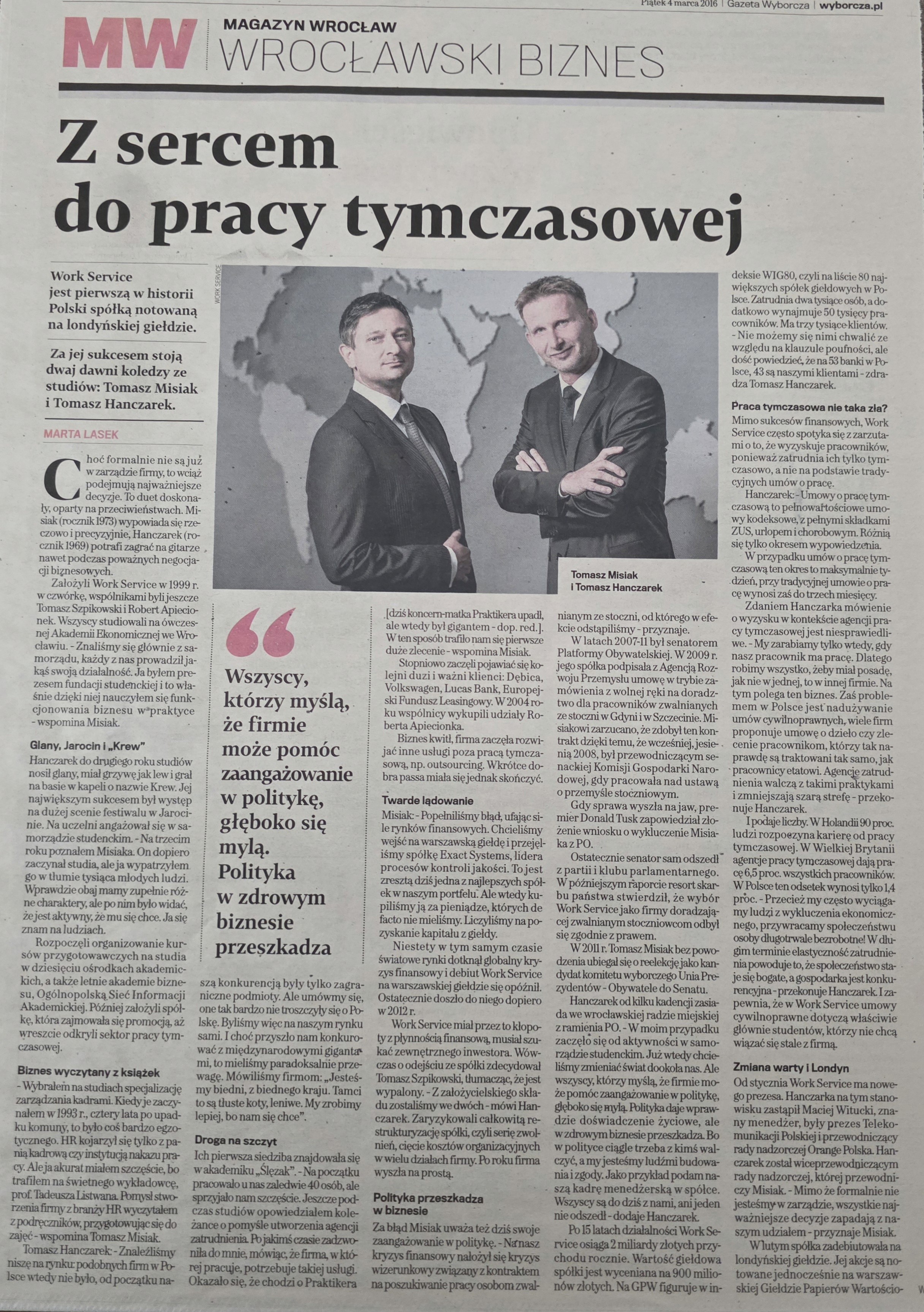
Work Service to pierwsza firma w historii Polski, która zadebiutowała na Giełdzie Papierów Wartościowych w Londynie. Za jej sukcesem stoi dwóch dawnych kolegów ze studiów: Tomasz Misiak i Tomasz Hanczarek.
MARTA LASEK: Choć formalnie nie zasiadają już w zarządzie spółki, wciąż podejmują najważniejsze decyzje. To duet idealny, oparty na przeciwieństwach. Misiak (ur. 1973) mówi rzeczowo i precyzyjnie, podczas gdy Hanczarek (ur. 1969) potrafi grać na gitarze nawet podczas poważnych negocjacji biznesowych. Założyli Work Service w 1999 roku w czteroosobowym składzie; pozostałymi partnerami byli Tomasz Szpikowski i Robert Apiecionek. Wszyscy studiowali na ówczesnej Akademii Ekonomicznej we Wrocławiu. „Znaliśmy się głównie z samorządu studenckiego; każdy z nas prowadził jakąś działalność. Byłem prezesem fundacji studenckiej i to dzięki niej poznałem praktyczną stronę biznesu” – wspomina Misiak.
Glany, Jarocin i „Krew”
Hanczarek do drugiego roku studiów nosił glany, miał grzywę jak lew i grał na basie w zespole Krew. Ich największym sukcesem był występ na dużej scenie festiwalu w Jarocinie. Na uczelni angażował się w samorząd studencki. „Misiaka poznałem na trzecim roku. On dopiero zaczynał studia, ale wypatrzyłem go w tłumie tysiąca młodych ludzi. Choć mamy zupełnie inne charaktery, było jasne, że jest aktywny i zdeterminowany. Mam nosa do ludzi”.
Zaczęli od organizowania kursów przygotowawczych do egzaminów wstępnych na uczelnie w dziesięciu ośrodkach akademickich, a także letnich akademii biznesu i Ogólnopolskiej Akademickiej Sieci Informacyjnej. Później założyli firmę zajmującą się promocją, aż w końcu odkryli sektor pracy tymczasowej.
Biznes wyczytany z książek
„Na studiach wybrałem specjalizację z zarządzania kadrami. Kiedy zaczynałem w 1993 roku, cztery lata po upadku komunizmu, było to coś bardzo egzotycznego. HR kojarzył się tylko z urzędnikiem od spraw personalnych lub instytucją nakazów pracy. Ale miałem szczęście, bo trafiłem na świetnego wykładowcę, prof. Tadeusza Listwana. O pomysle stworzenia firmy HR czytałem w podręcznikach, przygotowując się do zajęć” – wspomina Tomasz Misiak.
Tomasz Hanczarek: „Znaleźliśmy niszę na rynku: w tamtym czasie w Polsce nie było podobnych firm, więc od początku naszą jedyną konkurencją były podmioty zagraniczne. Ale powiedzmy szczerze, niewiele je Polska obchodziła. Byliśmy więc sami na naszym rynku. I choć musieliśmy rywalizować z międzynarodowymi gigantami, paradoksalnie mieliśmy przewagę. Mówiliśmy firmom: 'Jesteśmy biedni, z biednego kraju. Tamci to tłuste, leniwe koty. My zrobimy to lepiej, bo bardziej nam zależy'”.
Droga na szczyt
Ich pierwsza siedziba mieściła się w akademiku „Ślęzak”. „Na początku mieliśmy tylko 40 pracowników, ale dopisało nam szczęście. Jeszcze jako student opowiedziałem koleżance o pomysle założenia agencji zatrudnienia. Po pewnym czasie zadzwoniła do mnie z informacją, że firma, w której pracuje, potrzebuje takiej usługi. Okazało się, że to Praktiker [dziś spółka-matka Praktikera upadła, ale wtedy był to gigant – red. n.]. Tak zdobyliśmy nasze pierwsze duże zlecenie” – wspomina Misiak.
Stopniowo zaczęli pojawiać się inni duzi i ważni klienci: Dębica, Volkswagen, Lucas Bank czy Europejski Fundusz Leasingowy. W 2004 roku partnerzy odkupili udziały Roberta Apiecionka. Biznes kwitł, a firma zaczęła rozwijać inne usługi poza pracą tymczasową, takie jak outsourcing. Wkrótce jednak dobra passa miała się skończyć.
Twarde lądowanie
Misiak: „Popełniliśmy błąd, ufając sile rynków finansowych. Chcieliśmy wejść na Giełdę Papierów Wartościowych w Warszawie i przejęliśmy Exact Systems, lidera w procesach kontroli jakości. To zresztą jedna z najlepszych spółek w naszym portfelu do dziś. Ale wtedy kupiliśmy ją za pieniądze, których de facto nie mieliśmy. Liczyliśmy na pozyskanie kapitału z giełdy”.
Niestety, w tym samym czasie w rynki światowe uderzył globalny kryzys finansowy, a debiut Work Service na GPW opóźnił się. Ostatecznie doszło do niego dopiero w 2012 roku. W rezultacie Work Service miał problemy z płynnością i musiał szukać zewnętrznego inwestora. W tym momencie Tomasz Szpikowski zdecydował się opuścić firmę, twierdząc, że czuje się wypalony. „Z grupy założycielskiej zostaliśmy tylko my dwaj” – mówi Hanczarek. Zaryzykowali całkowitą restrukturyzację firmy, co wiązało się z serią zwolnień i cięciem kosztów organizacyjnych w wielu działach. Po roku firma wróciła na właściwe tory.
Polityka miesza się z biznesem
Misiak uważa dziś swoje zaangażowanie w politykę za błąd. „Na nasz kryzys finansowy nałożył się kryzys wizerunkowy związany z kontraktem na usługi pośrednictwa pracy dla zwalnianych pracowników stoczni, z którego ostatecznie się wycofaliśmy” – przyznaje. W latach 2007–11 był senatorem Platformy Obywatelskiej (PO). W 2009 roku jego firma podpisała z Agencją Rozwoju Przemysłu umowę z wolnej ręki na doradztwo dla zwalnianych pracowników stoczni w Gdyni i Szczecinie. Misiakowi zarzucano, że wygrał kontrakt, bo wcześniej, jesienią 2008 roku, był przewodniczącym senackiej komisji gospodarki narodowej, gdy ta pracowała nad ustawą stoczniową.
Gdy sprawa wyszła na jaw, premier Donald Tusk zapowiedział, że złoży wniosek o wykluczenie Misiaka z PO. Ostatecznie senator sam opuścił partię i klub parlamentarny. W późniejszym raporcie Ministerstwo Skarbu stwierdziło, że wybór Work Service jako firmy doradczej dla zwalnianych stoczniowców odbył się zgodnie z prawem. W 2011 roku Tomasz Misiak bezskutecznie ubiegał się o reelekcję jako kandydat komitetu wyborczego Unia Prezydentów – Obywatele do Senatu.
Hanczarek przez kilka kadencji zasiadał w Radzie Miejskiej Wrocławia z ramienia PO. „W moim przypadku zaczęło się od zaangażowania w samorząd studencki. Już wtedy chcieliśmy zmieniać świat wokół nas. Ale każdy, kto myśli, że zaangażowanie polityczne może pomóc firmie, jest w głębokim błędzie. Polityka daje doświadczenie życiowe, ale w zdrowym biznesie przeszkadza. Bo w polityce ciągle trzeba z kimś walczyć, a my jesteśmy ludźmi budowania i konsensusu. Jako przykład podam nasz zespół menedżerski w firmie. Wszyscy są z nami do dziś; nie odeszła ani jedna osoba” – dodaje Hanczarek.
Po 15 latach działalności Work Service osiąga 2 mld zł rocznych przychodów. Wartość rynkowa spółki szacowana jest na 900 mln zł. Jest notowana na GPW w indeksie WIG80, czyli na liście 80 największych notowanych spółek w Polsce. Zatrudnia dwa tysiące osób i dodatkowo wynajmuje 50 000 pracowników. Ma trzy tysiące klientów. „Nie możemy się nimi chwalić ze względu na klauzule poufności, ale dość powiedzieć, że na 53 banki w Polsce, 43 to nasi klienci” – wyjawia Tomasz Hanczarek.
Czy praca tymczasowa nie jest taka zła?
Pomimo sukcesu finansowego, Work Service często spotyka się z zarzutami o wyzysk pracowników, ponieważ zatrudnia ich tylko tymczasowo, a nie na tradycyjnych umowach o pracę. Hanczarek: „Umowy o pracę tymczasową to pełnowartościowe umowy ustawowe, z pełnymi składkami ZUS, urlopem i chorobowym. Różnią się jedynie okresem wypowiedzenia. W przypadku umów o pracę tymczasową okres ten wynosi maksymalnie tydzień, podczas gdy przy tradycyjnych umowach o pracę – do trzech miesięcy”.
Zdaniem Hanczarka mówienie o wyzysku w kontekście agencji pracy tymczasowej jest niesprawiedliwe. „Zarabiamy pieniądze tylko wtedy, gdy nasz pracownik ma pracę. Dlatego robimy wszystko, co w naszej mocy, by zapewnić mu stanowisko, jeśli nie w jednej firmie, to w drugiej. Na tym polega ten biznes. Prawdziwym problemem w Polsce jest nadużywanie umów cywilnoprawnych; wiele firm oferuje pracownikom 'umowy o dzieło' lub 'umowy zlecenia', traktując ich de facto dokładnie tak jak pełnoetatowy personel. Agencje pracy walczą z takimi praktykami i ograniczają szarą strefę” – argumentuje Hanczarek.
Podaje liczby. W Holandii 90 procent osób zaczyna karierę przez pracę tymczasową. W Wielkiej Brytanii agencje pracy tymczasowej zapewniają zajęcie 6,5 procentom wszystkich pracujących. W Polsce ten wskaźnik wynosi zaledwie 1,4 procenta. „Przecież my często wyciągamy ludzi z wykluczenia ekonomicznego; przywracamy społeczeństwu długotrwale bezrobotnych! W dłuższej perspektywie elastyczność zatrudnienia czyni społeczeństwo bogatym, a gospodarkę konkurencyjną” – przekonuje Hanczarek. Zapewnia również, że w Work Service umowy cywilnoprawne dotyczą głównie studentów, którzy nie chcą wiązać się z firmą na stałe.