Data
26.04.2016
Autor
Manager
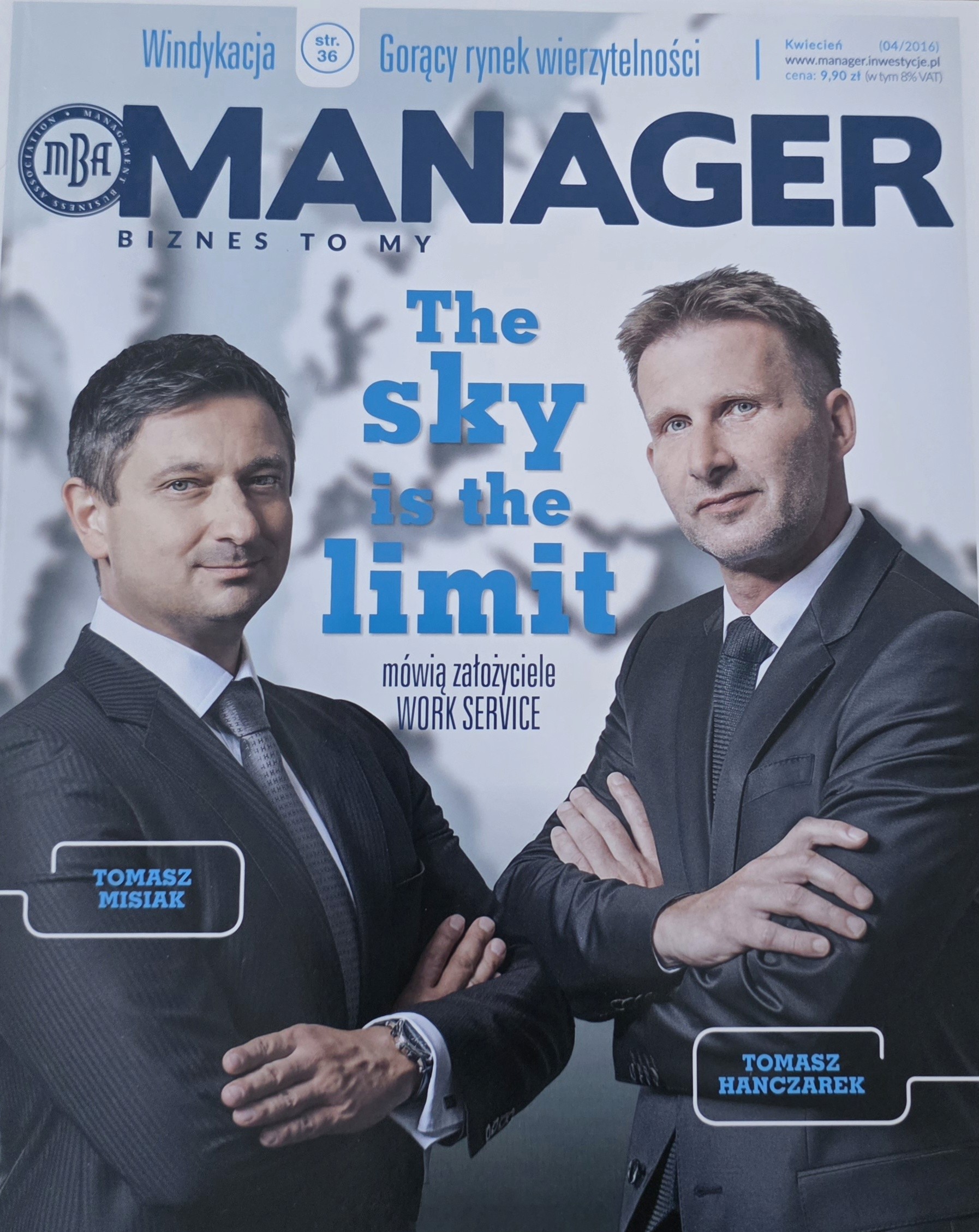
Wywiad z Tomaszem Misiakiem i Tomaszem Hanczarkiem
Rozmawiamy z Tomaszem Misiakiem i Tomaszem Hanczarkiem, założycielami Work Service, o historycznym debiucie spółki na Londyńskiej Giełdzie Papierów Wartościowych – który postrzegają jako etap rozwoju, a nie cel ostateczny – a także o ich motywacjach, ambicjach i planach na przyszłość.
Od 18 lutego Work Service jest notowany na Londyńskiej Giełdzie Papierów Wartościowych. Jaki był cel?
Tomasz Misiak: Work Service to firma międzynarodowa, generująca 50% swoich marż i wyników poza Polską. Działamy w ponad 15 krajach, posiadając własne spółki zależne w 12 z nich, a w pozostałych operujemy poprzez pracowników oddelegowanych do konkretnych zadań dla klientów. W naszych planach przyszłość firmy wiąże się z dołączeniem do grona największych europejskich przedsiębiorstw. Obecnie Work Service zajmuje 65. miejsce na liście Top Global. Zdecydowaliśmy się na dual-listing, nie porzucając rynku warszawskiego, ponieważ wierzymy, że ten krok powinien przyciągnąć odpowiednich inwestorów i pokazać nasze aspiracje wzrostowe.
Tomasz Hanczarek: Wierzymy, że Work Service musi być notowany na najstabilniejszych rynkach, takich jak Londyn czy Stany Zjednoczone; choć na razie nie mamy interesów biznesowych w USA. Uważamy, że dla bezpieczeństwa naszych inwestorów, stabilności spółki i relacji z bankami powinniśmy ubezpieczyć się na wypadek sezonowych kłopotów na lokalnym rynku, jakim jest Giełda Papierów Wartościowych w Warszawie. Choć duża, wciąż jest traktowana jako lokalna. Wszelkie zawirowania wokół nowego rządu skutkują tam panicznymi ruchami. Chcemy, aby inwestorzy lokujący kapitał w akcje Work Service byli ubezpieczeni przed takimi ruchami — stąd nasza „kotwica bezpieczeństwa” w Londynie.
T. M.: Warto zauważyć, że nie przeprowadziliśmy jeszcze oferty publicznej.
Dokładnie — LSE to nie muzeum. Nie idzie się tam oglądać obrazów, lecz po kapitał. A jednak to debiut bez emisji.
T. M.: Zgoda, jeśli spojrzymy na free float naszej grupy, wynosi on 30%. To niewiele jak na Londyn, ale reprezentuje setki milionów złotych. Inwestorzy w Londynie będą mieli czym handlować. Wszystkie akcje są notowane 1:1 w Warszawie i Londynie. Co więcej, i co ważne, koncentrujemy się na inwestorach londyńskich. Obecnie przygotowujemy tam roadshow na maj, a na spotkania z funduszami wybieramy się już w kwietniu. Przedstawimy wyniki spółki i sprzedamy naszą wizję. Wierzę, że Londyn ma ogromny potencjał i zrozumienie dla naszego rynku. Jesteśmy jedyną polską firmą z branży HR notowaną na LSE. Co więcej, jesteśmy tam w ogóle jedyną polską firmą. To historyczne wydarzenie. Dostałem SMS-a od kuzynki z Glasgow, która studiuje na prestiżowej uczelni ekonomicznej, że jest bardzo dumna, bo profesor wspomniał, że właśnie zadebiutowała w Londynie pierwsza polska firma. To znak czasów: zjednoczona Europa i zjednoczony rynek kapitałowy.
T. H.: Jesteśmy zaskoczeni, że polskie fundusze nie inwestują w polskie firmy. Powinien istnieć rodzaj narodowego patriotyzmu biznesowego. Jesteśmy na Londyńskiej Giełdzie Papierów Wartościowych, ponieważ chcemy, aby wszystkie fundusze miały łatwy dostęp do kupna i sprzedaży. Oczywiście istnieją wymogi informacyjne; trzeba dostarczać dane, które są później publikowane i przesyłane do odpowiednich funduszy. Istnieją również instytucje, które informują fundusze o tym, co dzieje się w konkretnych spółkach. Sama obecność na giełdzie sprawia, że informacje z Work Service docierają do analityków. Może nie z dnia na dzień, ale z czasem nastąpi boom na akcje Work Service. Jesteśmy przekonani, że staną się one coraz bardziej modne.
Ostatnie dwa lata to seria przejęć, które zdefiniowały Państwa znaczenie i zasięg. Rozumiem, że Londyn to trampolina do przeprowadzenia emisji i kolejnych akwizycji.
T. H.: Work Service z pewnością nie przestanie rosnąć. Siedem lat temu zakładaliśmy wzrost organiczny poprzez akwizycje na poziomie 20–30%. Jednak gotówka wygenerowana w ciągu roku nie wystarcza na przejęcia. Musi istnieć dodatkowe finansowanie z banków lub poprzez emisje. Akwizycje, które zostaną przeprowadzone w tym roku i w ciągu najbliższych 18 miesięcy, powinny być niszowymi przejęciami konkretnych, wysokomarżowych marek, które mogą stać się globalne.
T. M.: Jednak wraz z akcjonariuszami zakładamy również tak zwaną teorię „Wielkiego Wybuchu” (Big Bang). Jeśli pojawi się duży inwestor z ogromnym potencjałem inwestycyjnym, zdolny do podwojenia wielkości grupy w krótkim czasie i potrojenia jej wartości, jesteśmy w stanie rozważyć taki wariant. Nie ukrywamy, że jesteśmy zaskoczeni tym, jak wiele poważnych instytucji finansowych chce rozmawiać z Work Service w kontekście strategicznych możliwości.
Czy to tylko Europa, czy także ruch za ocean?
T. M.: Mówimy o globalizacji firmy. Po wejściu na Londyńską Giełdzie Papierów Wartościowych zostaliśmy zauważeni przez rynek w kontekście silnie międzynarodowym. To informacja, którą jeszcze się nie dzieliliśmy – „Manager” będzie pierwszy: zostaliśmy zaproszeni do rozmów ze Światową Konfederacją Zatrudnienia (WEC/CIETT), która skupia największe globalne firmy, naszych największych konkurentów. Te firmy zaprosiły nas do dołączenia do stowarzyszenia. Oznacza to, że jesteśmy postrzegani przez największych graczy na świecie jako partner godny zasiadania przy stole i dyskutowania o rynku globalnym, a z pewnością o rynku europejskim.
I stało się to konkretnie po debiucie w Londynie?
T. M.: Tak. Nasza konkurencja uznała, że jesteśmy graczem, który powinien znaleźć się wśród nich przy tym samym stole, dyskutując o przyszłości europejskiego rynku.
T. H.: Rynek HR to rynek przyszłości. Mamy ogromny potencjał konsolidacyjny. Dla funduszy jesteśmy idealnym celem. Fundusze szanują naszą pracę, ale widzą też ogromną szansę na zysk.
Jak wygląda proces kwalifikacji do przejęć? Czy Państwa celem jest kraj, czy raczej konkretny sektor?
T. M.: Nasza strategia jest jasna. Chcemy być firmą o znaczącej pozycji na głównym rynku. Interesują nas rynki rekrutacji, pracy tymczasowej i outsourcingu wszystkich krajów europejskich. Jesteśmy już obecni na rynkach o najwyższych wynikach, takich jak Francja, Wielka Brytania, Niemcy, Holandia i Włochy – albo poprzez delegowanie pracowników, albo przez własne spółki zależne. Interesują nas rynki specjalistyczne w trzech bardzo konkretnych obszarach: executive search, inżynieria jakości oraz IT, ponieważ w tych dziedzinach jesteśmy liderami. Nasza spółka, Exact Systems, przygotowuje się do procesu pozyskania kapitału przez giełdę. Obecnie znajduje się w Top 6 globalnych firm w swojej branży. Kiedy ją kupowaliśmy, miała 15 mln PLN przychodów i 1 mln PLN EBITDA. Po siedmiu latach współpracy z grupą Work Service ma ponad 300 mln PLN przychodów i blisko 27 mln PLN EBITDA. To pokazuje, jak potrafimy rozwijać podmioty będące w naszym zasięgu.
T. H.: Wierzymy, że mamy trzy marki, które mogą stać się globalne (poza Europą): Exact Systems, IT Contract (IT, inżynieria, preselekcja, rekrutacja) oraz Work Service (doradztwo, kwalifikacje, dostarczanie pracowników). Chcemy stabilnie rosnąć w Europie i stawiać na współpracę. Menedżerowie od nas nie odchodzą, podobnie jak partnerzy mniejszościowi. Chcą z nami zostać i to jest dla nas najważniejsze. Nigdy nie kupujemy 100% firmy; zawsze kupujemy pakiet większościowy, ale kontynuujemy współpracę.
Ponieważ mają know-how?
T. H.: Oni mają know-how i my mamy know-how. To know-how do kwadratu, a nawet silnia ($n!$). Na przykładzie Exact Systems: współpraca trwa 10 lat, okres earn-out minął trzykrotnie, a oni nie chcą sprzedawać swoich udziałów; chcą dalej rozwijać firmę z nami. I to jest sedno sprawy.
Jak wiadomo, bogactwo społeczeństwa definiuje nie liczba firm, lecz liczba firm globalnych, bo tam tworzy się wartość dodana. Czy Work Service można nazwać firmą globalną?
T. M.: Z pewnością jeszcze nie pod względem skali, ponieważ zajmujemy 60. miejsce na świecie w branży HR. Ale Polska dołączyła do gospodarki światowej zaledwie dwadzieścia kilka lat temu i może konkurować ze światem w bardzo niewielu dziedzinach. Taką dziedziną mógłby być węgiel, gdyby był wystarczająco cenny (ale nie jest), wódka Wyborowa czy szynka w puszce. Problem polega na tym, że nie udało nam się stworzyć wielu produktów – choć kilka istnieje – które mogą podjąć globalną konkurencję. Z pewnością nie są to wysokie technologie, ale są to ludzkie umysły. Dzięki temu my, jako firma, jesteśmy w stanie rosnąć. Dla nas naprawdę nie ma barier wzrostu. Mamy potencjał ludzki, ogromny głód rozwoju i chęć udowodnienia, że Polacy potrafią. Szkoda tylko, że międzynarodowe sukcesy polskich firm nie są w naszym kraju wystarczająco doceniane.
Czego potrzebuje lokalny polski lider, by stać się firmą globalną?
T. H.: Mój przyjaciel Piotr Krupa z firmy Kruk, który genialnie rozwinął to przedsiębiorstwo, jest świetnym przykładem. Jego firma ma miliardową kapitalizację i coraz bardziej rozwija się za granicą. Potrzebne są przede wszystkim: wola, brak kompleksów i cel skoncentrowany nie na „dobrym życiu” i dwóch samochodach w garażu, ale na osiągnięciu sukcesu. Zachodnie fundusze często pytają mnie: „Dlaczego rośniecie dwa razy szybciej niż wasi konkurenci?”. Odpowiadam: „Ponieważ byliśmy i jesteśmy biedni i chcemy wyciągnąć Polskę z tej biedy”. To determinacja. Chcemy bardziej. Po drugie: Tomasz Misiak i ja nie założyliśmy firmy, by kupić dom czy samochód. Od samego początku chcieliśmy stworzyć największą firmę na świecie. Trzecia rzecz wiąże się z drugą: kiedy polski piłkarz kopie piłkę, nie myśli, że chce być jak Lewandowski; marzy o tym, by mieć 10 czy 20 tysięcy miesięcznie. Kopie coraz lepiej, kupuje go druga Bundesliga, gra tam i zarabia swoje 20 tysięcy. Spełnił marzenie, jest szczęśliwy i to koniec. My chcemy być Lewandowskimi; nie interesują nas półśrodki. Chcemy zmierzyć się z gigantami i trzeba mieć to w kręgosłupie.
Porozmawiajmy o polskim rynku pracy. Jak on się zmienia?
T. M.: Dla Polaków – fantastycznie. Płace rosną stosunkowo szybko, a bezrobocie spada do historycznie niskich poziomów. Widzimy, że w wielu zawodach, zwłaszcza specjalistycznych, brakuje rąk do pracy. To również efekt emigracji zarobkowej, ale nie poradziliśmy sobie jeszcze z imigracją do naszego kraju. Jest wielu Ukraińców, ale niekoniecznie tych, których byśmy chcieli. To, co jest zarazem pozytywne i negatywne, to wydarzenia wokół sfery politycznej rynku pracy. Uważam, że obowiązkiem rządu jest jego cywilizowanie i zapewnienie sprawnego funkcjonowania, ale trzeba być bardzo ostrożnym, by nie napompować szarej strefy. Dzisiejsze działania, służące bezpieczeństwu, mogą zamienić się – jak obserwujemy na rynku – w ucieczkę od legalnego zatrudnienia. Jednocześnie firmy pozbawia się elastyczności poprzez zmiany w systemie zatrudnienia, a koszty pracy podnosi się poprzez maksymalizację obciążeń ubezpieczeniowych we wszystkich formach. Właściwie nie jesteśmy przeciwko tej części. Sytuacja z ubezpieczeniami, którą mieliśmy wcześniej, była zła dla wielu – w tym dla nas – ponieważ powodowała powstawanie szarej strefy. Niemniej jednak w czasach, gdy średni cykl życia produktu wynosi kilka miesięcy, firmy potrzebują elastyczności pracy, podczas gdy rząd jednocześnie ogranicza pracę tymczasową, otwarty rynek i formy zatrudnienia. Może to skutkować ucieczką, zwłaszcza małych i średnich firm, w strefy, w których nie powinny się znajdować. Może to również skutkować spadkiem konkurencyjności polskiej gospodarki, prowadząc do wzrostu bezrobocia i spadku dynamiki wzrostu płac. Niestety, nie da się regulować rynku pracy odgórnie, zwłaszcza w zakresie płac, ponieważ wciąż mamy wiele do zrobienia w kwestii wydajności.
Wiele mówi się o imigracji, z którą zmaga się Europa. Jesteśmy naturalnym miejscem dla imigracji z Ukrainy. Jak Państwo, jako Work Service, postrzegają proces przyjmowania Ukraińców, który obecnie jest „dziki”?
T. H.: W wielu regionach zapotrzebowanie na ludzi jest tak duże, że coraz śmielej i częściej sięgamy po Ukraińców. Coraz więcej z nich pracuje w Polsce. I to jest ratunek dla polskiej gospodarki, a nie zagrożenie; oni budują nasze PKB. Europa też nie ma już z tej drogi odwrotu. W niemieckiej gospodarce w ciągu 10 lat zabraknie 5 milionów ludzi. W ciągu najbliższych 5 lat milion kierowców ciężarówek przejdzie na emeryturę. Czy to oznacza, że niemiecki rynek transportowy się zatrzyma? Nie, wezmą Polaków, Czechów i Słowaków. A w Polsce musimy wspierać się ludźmi z Ukrainy. Ukraina to 50 milionów ludzi – rezerwuar dla Europy na wiele lat. Polski rynek ma niedobory siły roboczej i coraz więcej miejsc pracy. Przepaść między płacami w Polsce i w Niemczech będzie się zmniejszać. To już się wyrównuje; proces podwyżek już się zaczął. Nie mamy innego wyjścia i aby utrzymać obecny wzrost PKB, musimy sięgać po Ukraińców.
Polski rynek zmienia się z rynku pracodawcy w rynek pracownika. Co to oznacza dla Państwa firmy?
T. M.: Wierzymy, że zachodzące obecnie zmiany prawne pozytywnie wpłyną na wzrost w firmach usługowych i outsourcingowych. Ze względu na sytuację rynkową oraz cykl życia produktów i usług, wiele przedsiębiorstw potrzebuje elastyczności. Firmy nie poradzą sobie z tym same. Tę elastyczność zapewniają wyspecjalizowane firmy i my z pewnością taką firmą będziemy. Dzisiaj wciąż jesteśmy postrzegani przez pryzmat historii jako firma zajmująca się pracą tymczasową, mimo że nie jest to już nasz główny obszar działalności. Jesteśmy strategicznym partnerem HR dla większości przedsiębiorstw, któremu możemy pomóc rozwiązać problemy od audytu systemów motywacyjnych po systemy zatrudnienia i dostarczanie wyspecjalizowanych zespołów. Przez pierwsze pięć lat byliśmy postrzegani przez pryzmat współpracy z sieciami handlowymi. Dzisiaj praktycznie nie ma nas już na tym rynku. Udało nam się uwolnić od tego wizerunku, ale wciąż będziemy „niewolnikami” wizerunku firmy świadczącej pracę tymczasową i kontrakty, które nie spełniają standardów. Tymczasem praca tymczasowa to pełna umowa o pracę z pełnym ubezpieczeniem, urlopem i składkami zdrowotnymi – jedyne, co różni ją od standardowej umowy z Kodeksu pracy, to okres wypowiedzenia. Na całym świecie służy ona aktywizacji młodych ludzi; jest absolutnie normalną formą zatrudnienia.
T. H.: Work Service pełni funkcję społeczną polegającą na ochronie pracowników – wbrew temu, jak przedstawiają to związki zawodowe. Jak powiedział Tomasz Misiak, jest to pełnoprawna umowa. Pamiętajmy, że każde miejsce pracy może zbankrutować lub odnotować spadek zamówień. Co wtedy robią? Zwalniają ludzi. Jeśli ci ludzie nie mają z nami kontaktu, stają się po prostu bezrobotni. Jeśli są z nami – wciąż mają umowę. Zarabiamy tylko wtedy, gdy ta osoba pracuje. Więc jeśli zostaną zwolnieni, natychmiast przenosimy ich gdzie indziej. Zatem taka osoba jest u nas bezpieczniejsza niż na umowie o pracę u swojego pracodawcy. Jesteśmy ich prywatnym headhunterem.
Gdzie widzą Państwo siebie i firmę za pięć lat?
T. M.: Za pięć lat Work Service znajdzie się w gronie najlepszych firm w Europie. Będzie mieć ogromne znaczenie w całej Europie Środkowo-Wschodniej, będąc niepokonanym, twardym liderem regionu. Będzie posiadać globalne marki w usługach specjalistycznych i będzie znaną, rozpoznawalną marką na Londyńskiej Giełdzie Papierów Wartościowych. Gdzie my będziemy? Mam nadzieję, że wciąż w naszej firmie, budując ją na kolejnych etapach jej historii. Ale bierzemy pod uwagę także wariant, w którym za pięć lat zostaniemy połączeni z jednym z dużych międzynarodowych graczy i będziemy zajęci budowaniem nowych biznesów z naszymi funduszami inwestycyjnymi. Pięć lat to bardzo długo. Gdyby ktoś mi powiedział pięć lat temu, jak będzie wyglądał dzisiejszy dzień, pewnie bym mu nie uwierzył. Gdyby ktoś wtedy powiedział, że będziemy mieli okazję zadebiutować w Londynie, pomyślałbym, że to będzie niezwykle trudne. Dziś te cele osiągnęliśmy i jesteśmy z nich dumni. Dlatego nie należy się ograniczać – jak często mówiliśmy w firmie – sky is the limit.
T. H.: Zdecydowanie będziemy aktywni w biznesie. Wierzymy, że Work Service może być nie tylko w Top 5 w Europie i że może rosnąć nie przez pięć, ale przez dziesiątki lat. Chcemy budować polską gospodarkę, tworzyć nowe biznesy i – podkreślę to jeszcze raz – nie po to, by kupić mieszkanie, dom czy Porsche, ale by budować wielkie firmy.