Date
4.01.2026
Author
Tomasz Misiak
The USA is not stopping Maduro. The USA is stopping a process that threatens the dollar.
What happened recently in Caracas should be viewed not as a political episode, but as a turning point in the global security and financial architecture. The United States not only captured Nicolás Maduro and his wife Cilia Flores but transported them to US territory as part of an operation the American president described as temporary "management of Venezuela." This is not an incident—it is a strategic signal.
1. The Hemispheric Doctrine
The US hemispheric doctrine has never been an empty slogan. The new national security strategy assumes that there will be no permanent presence of other powers in the so-called "two Americas." For years, China and Russia built political and economic partnerships in Venezuela—ranging from investments to military cooperation. The capture of Maduro is not a "regime change" in the classic style; it is an attempt to break the axis of influence that Caracas offered to Beijing and Moscow.
2. Oil and Strategic Assets
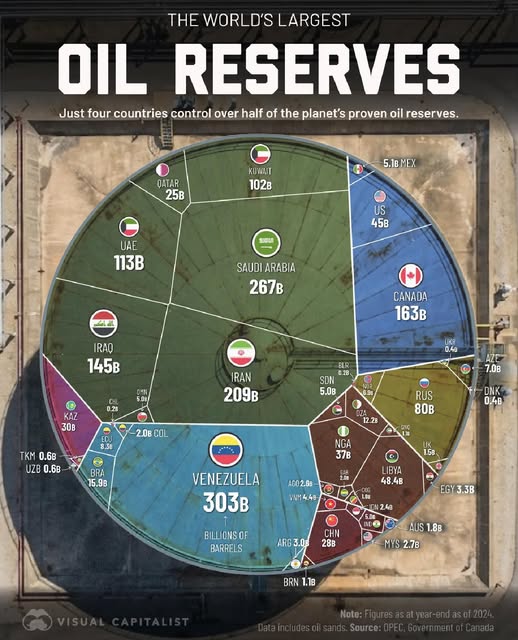
Venezuela possesses the largest proven oil reserves in the world. In a world where the dollar is weakened by record debt, chronic budget deficits, and a lack of political will to limit them, control over such resources is not just about energy—it is about the security of the US monetary system. Furthermore, when you include rare earth metals, lithium, and key raw materials of the future, Venezuela is not a local resource; it is a global strategic asset.
3. The Legacy of the Petrodollar
History has not been abandoned. After the US moved away from the gold standard, the world required a new foundation for the dollar's value. Oil effectively assumed this role. Energy settlements in dollars were part of a contract: Saudi Arabia's security in exchange for maintaining the petrodollar. This system functioned for decades—until today.
A Preemptive Global Operation
Maduro was not detained because he is an autocrat; there are many such leaders. He was detained because Venezuela—with its resources and geopolitical alliances—began to impact the energy-monetary balance that the dollar has maintained for decades. This is not a "reaction to the crisis in Caracas." It is a preemptive global operation.
Consequences and Escalation
The American operation has met a wave of criticism—from accusations of violating sovereignty to fierce comments from powers like China. Caracas has declared the US actions an act of aggression, and the Venezuelan vice president has declared herself interim president. This means the tension will not disappear tomorrow; it will escalate.
Decisions have already been made, and we will see the effects in the coming years. Geopolitics does not judge intentions—it judges results.