Date
13.01.2026
Author
Tomasz Misiak
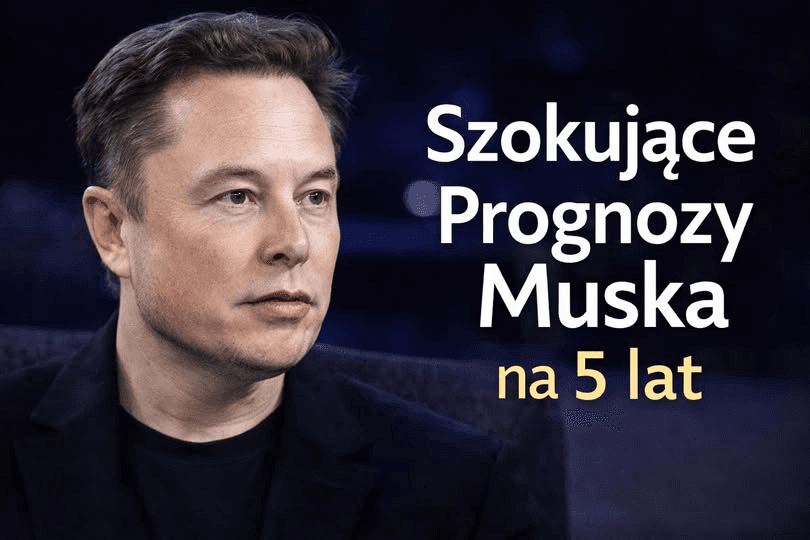
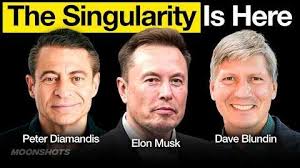
The now-famous conversation between Elon Musk and Peter Diamandis is neither a manifesto nor an attempt to shock. It is rather an engineering analysis of the direction in which technology, the economy, and social systems are already heading today. Musk isn't talking about a distant future. He talks about processes that have already started and which, in his view, will only accelerate.
A large part of the conversation concerns health. Musk points out that the potential extension of human life by half doesn't result from a single breakthrough discovery, but from a cumulative progress in biology, data, and engineering. He describes aging as a systemic phenomenon that can be analyzed, measured, and optimized. In this sense, medicine ceases to be a reaction to illness and starts being the management of the body's state over time.
His theses regarding surgical medicine are even more concrete. Musk claims that robotic systems, supported by artificial intelligence, will soon take over a significant portion of surgical procedures. Not because replacing humans is a goal in itself, but because machines learn faster, act repeatedly, and eliminate many sources of error. In the longer term, access to high-quality medical care is set to level out, rather than remaining a privilege of the few.
The economy also takes up a lot of space in the conversation. Musk assumes that AI development will significantly increase productivity in almost every industry. When the capacity to produce goods and services grows faster than the amount of money in circulation, prices start to fall, and shortages lose significance. This creates tensions in systems based on regulation, taxes, and transfers, which by nature react slower than technology.
His approach to money and long-term financial planning stirs the most controversy. Musk suggests that in a world of high availability of goods, money might gradually lose its role as the main tool for securing the future. He doesn't speak of money disappearing, but of a change in its function. He says it's not worth saving for retirement, because in 20 years we will have Universal High Income.
A crucial element of this conversation is also the pace of change. Musk emphasizes that progress doesn't result solely from better hardware. Algorithmic improvements alone can multiply system efficiency manifold year over year, even with unchanged infrastructure. It is this pace that makes many forecasts seem exaggerated until they start materializing.
These assumptions might turn out to be too optimistic or play out over a different timeframe than Musk predicts. However, they are not detached from reality. They are connected by the conviction that changes happen gradually, and then suddenly become visible to everyone. If even part of these processes comes to fruition in the coming years, the next decade won't just be a period of adaptation. It will be a time in which many operational models known today lose their relevance. And the biggest challenge won't turn out to be the technology itself, but the ability of people and organizations to abandon old assumptions.