Date
8.01.2026
Author
Tomasz Misiak
"If You Want Peace, Prepare for War"
These words resonate with unsettling force following today’s communication from Donald Trump.
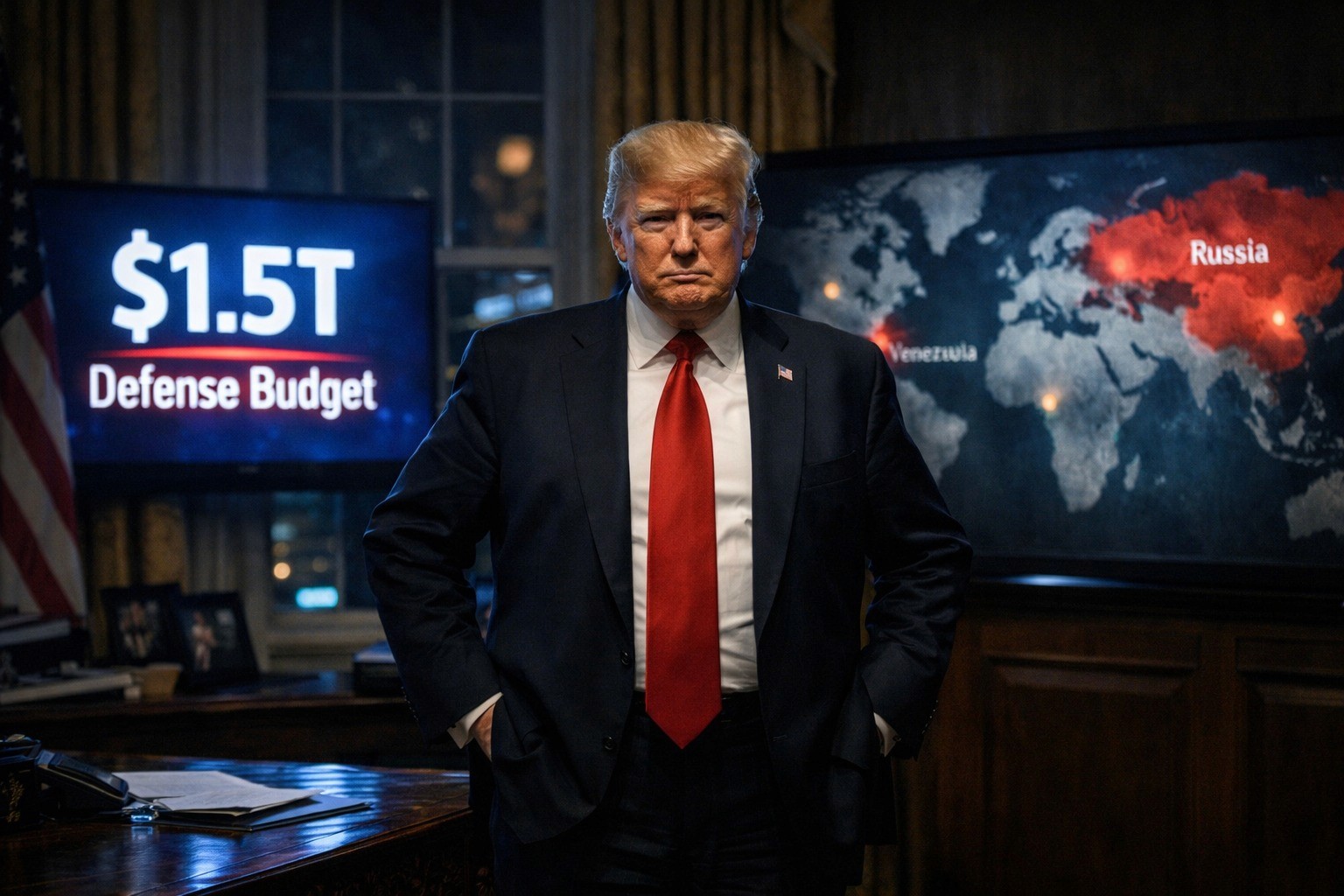
On his Truth Social platform, he announced that since the USA is "earning like never before" from customs duties and tariffs—for which, in effect, the whole world is paying—the United States is increasing its defense budget from $980 billion to $1.5 trillion. That is an increase of over 50%.
The Scale of Spending
Today, the USA spends approximately 3% of its GDP on armaments. With a GDP exceeding $30 trillion, this represents staggering sums. After the change, we are talking about 4.5% of GDP—expenditure greater than the entire GDP of Poland. Historically, such a spike in spending occurred mainly during the war in Afghanistan. The question remains: what is Trump preparing for?
Interestingly, this information appears just before a Supreme Court decision regarding the legality of the tariffs. The political message is clear: without tariffs, there is no US security. Trump is consolidating power around a narrative of threat: global war, Russia and China as rivals, and Venezuela as a potential target for action. Paradoxically, he is doing this without abandoning his aspirations for the Nobel Peace Prize.
Political and Economic Stakes
Simultaneously, a political battle is unfolding ahead of the midterms. Trump openly fears losing control of Congress, and even the threat of impeachment. Prediction markets currently give Democrats a 77% chance of taking the majority. If that happens, such radical fiscal decisions will become impossible. This explains the haste and the "all-in" strategy.
The problem is that the USA already has a massive deficit, and debt servicing costs a fortune:
Budget revenues: approx. $5.6 trillion.
Tariff revenues: approx. $300 billion.
Military spending increase: over $500 billion.
In effect, the entire planned deficit is "eaten" by the army. Promises of savings—including those associated with Musk’s DOGE—have not worked. The direction is clear: increase revenue and strength.
Global Implications
For voters, this may be attractive. A huge number of Americans serve in the military, have families there, and appreciate the sense of state power. Republicans, usually fiscally conservative, are supporting it this time.
What are the conclusions for us?
Deterrence: A strong USA undoubtedly cools the appetites of Russia and China—who together spend three times less than Trump’s plan.
Economic Risk: On the other hand, economic instability in the USA could be a tragedy for Europe. Crises "bred" in America have extinguished our economies before—in 2000 and 2008.
The USA is becoming a hegemon that is swinging its big stick ever more forcefully. History shows that partnerships win over forceful pressure. A world operating under compulsion begins to look for alternatives.
One can only hope this does not come at the expense of security, the Western community, and the achievements of over 80 years of the post-war alliance between Europe and the USA. Because the true Art of the Deal remains the one where WIN-WIN is the best option.